
It has been seven months since the iconic motorcycle manufacturers, Harley-Davidson and Triumph, embarked on their journey in India with the backing of partners Hero MotoCorp and Bajaj Auto. According to data shared by the Indian majors, both brands are already creating ripples in the above 350cc category. The increase in sales has prompted a ramp-up in production and even the doubling of retail touchpoints for one of them.

The Reserve Bank of India (RBI), on Thursday issued orders restraining commercial transactions routed through intermediaries by a card network. The central bank, without naming the card network, said the intermediary with an arrangement with the network, did not have the authorisation to function under the Payment and Settlement Systems (PSS) Act. This led the regulator to suspend the arrangement till further notice.

Preparations are in the final stages by the Chennai-headquartered space-tech startup Agnikul Cosmos for the maiden launch of India's first-ever private launchpad and the second rocket launch by a private sector player.

Following the Reserve Bank of India's (RBI's) action against Paytm Payments Bank, participants in the fintech ecosystem have turned their attention to giving priority to compliance with regulatory norms. Fintech industry players say the episode will ensure adherence to such measures. Executives Business Standard spoke to said companies should have clarity on their requirements.

The push given to rooftop solar installation in the Interim Budget ties in with its high rate of adoption in Tier-II and -III cities of India. If original equipment manufacturers (OEMs) in the automobile industry, government, and the solar sector are to be believed, in cities of Rajasthan, Gujarat, and Kerala, 45-50 per cent of electric-vehicle (EV) users are employing rooftop power to charge their vehicles. This is compared to the national average of 25 per cent, say industry sources.

'We do not see people getting reduced, but because of automation, we will do more work.'

In the backdrop of the crisis brewing at Paytm Payments Bank, major fintech companies are ramping up their workforce and inducting new faces in their leadership teams, industry sources said on Wednesday. Users will not be able to add funds to their Paytm Payments Bank Wallet after February 29, though they will still be able to use the services and the existing balance in the wallets, according to the Reserve Bank of India (RBI) diktat. Industry sources said that competitors to Paytm are investing heavily in offline payments while doubling their salesforce.

After startups and Big Tech, the layoff season may have begun at the $245 billion Indian information-technology (IT) industry. Bengaluru-based IT major Wipro is looking to cut hundreds of jobs, targeting mid-level employees working onsite as the company looks to improve margins, according to a media report, citing two sources. The company has said it is aligning its business and talent to the changing market environment.
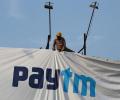
The Reserve Bank of India (RBI) has barred Paytm Payments Bank from most operations, including taking deposits and fund transfers with effect from March 1, 2024. The curbs on the bank come amid several alleged failures such as violations of know-your-customer (KYC) norms. Under such a scenario, here's what works for customers using Paytm Payments Bank, according to the company.

One97 Communications Ltd (OCL), the parent firm of fintech major Paytm, has denied reports about any investigation by the Enforcement Directorate (ED) into the company, its associates, and its founder and chief executive officer (CEO), Vijay Shekhar Sharma. The company, in an exchange filing on Sunday, said it had cooperated with the authorities when users or merchants on its platform were subject to enquiries in the past. "We would like to set the record straight and deny any involvement in anti-money laundering activities.

'If businessmen should be included in the political process -- which is essential in my opinion -- they need to have the freedom to express themselves and to take stands against the government of the day, without fear of reprisals and attacks on their business.'

'From data on enquiries, we can build what we call a data lake or a data warehouse where data is classified into various cohorts and then we use AI and ML tools to predict demand down the line.'

'It will drive a lot of surrounding business, that is where we see some good projects coming in.'

As Ayodhya readies itself for the glittering, much-awaited consecration ceremony of the Ram Mandir on January 22, and as millions of pilgrims and devotees pour into the holy city for the momentous event, companies are rushing to do their bit and be a part of the mega celebrations. Some are offering a part of their profits as donations, telcos are beefing up the number of cellular towers to ensure better connectivity, and there are those distributing jalebis and food platters.

Technology companies continue to be the most valued brands globally, with the top five most valued companies from the technology sector, according to Brand Finance 2024. Samsung has entered the top five most valued brands globally. Apple secured the first position after falling to the second spot in 2023.

'Two in three creators in India who earn money from YouTube agree that YouTube is their primary source of revenue.'

The phenomenon of fog is largely Delhi-centric. 'Airlines may think that we only have conditions of extreme fog on a few days every year, and spending a pilot's time and the airline's money on training can add up to its expenses.' 'So, they may prefer holding it for a few days.'

Driven by mega investment proposals from Tata Power, Adani group, Singapore's Sembcorp Industries and Leap Green Energy, among others, the two-day Global Investors Meet 2024 in Tamil Nadu is expecting an infusion of around Rs 6.64 trillion. This is likely to create around 2.69 million direct and indirect jobs in the state. "Due to our tireless efforts and your participation during this Global Investors' Meet, we have attracted an unprecedented Rs 6.64 trillion of investments.

The securities regulator's approval for the first US-listed exchange traded funds (ETF) to track bitcoin has given Indian cryptocurrency companies hope that the move would create domestic support for the digital assets. The US Securities and Exchange Commission (SEC) on Thursday approved 11 ETFs for bitcoin, perhaps the most popular virtual currency. It would enable investors to access bitcoin without challenges such as setting up wallets or accounts with crypto exchanges that have previously suffered cyberattacks or implosion.

Trouble started brewing after Cognizant announced that Ravi Kumar, former Infosys president, would take over as the Nasdaq-listed company's CEO.
 © 2026 Rediff.com - Advertise with us - Disclaimer - Privacy Policy - Sitemap - Feedback - About us - Terms of use - Grievances